

DIY: Renovating and cleaning firebricks

Upgrade your Fireplace & Barbeque with DIY Care
Your fireplace and barbecue are the heart of winter evenings and summer gatherings. However, over time and heavy use, their firebricks can show signs of wear: cracks, discoloration, and even peeling.
Don't despair! With the right products and a little DIY spirit, you can restore their shine and functionality easily and affordably.
In this article, we will introduce you to the essential "weapons" for DIY renovation of your fire bricks: fire-resistant mortars-adhesives and barbecue fireplace fire brick cleaners. Get ready to become the master of the house!

Refractory Mortars & Adhesives: The Savior of Worn Firebricks.
The high temperatures that develop in the fireplace and barbeque require special materials for repairing firebricks. Common mortars and adhesives do not withstand and will soon lead to new damage. This is where refractory adhesives and mortars come in, designed to withstand extreme temperatures and provide a strong and long-lasting bond.
When do you need refractory mortar or adhesive?
- Cracks: Small or large cracks in firebricks can affect their structural integrity and heat performance.
- Detachments: If a firebrick has become completely detached, its replacement with a strong refractory material is necessary.
- Damage to joints: The joints between firebricks can wear out and disintegrate over time, allowing moisture to enter and further damage.
How to use refractory mortars and adhesives like a pro:
- Preparation: Thoroughly clean the area to be repaired of dust, soot and loose materials. Use a stiff brush or a spatula.
Materials for Preparation:
- Stiff brush (metal or plastic, depending on the surface)
- Spatula
- Cloth or sponge
- Broom or vacuum cleaner (optional)
- Mixing (for mortars): Carefully follow the manufacturer's instructions for the ratio of water to mortar. Mix thoroughly until a homogeneous mixture with the appropriate texture is created.
Ingredients for Mixing:
- Refractory mortar (powder)
- Clean water
- Mixing container (plastic or metal)
- Spatula or trowel for stirring
- Crack application: Use a narrow spatula to carefully fill the cracks with the mortar or adhesive. Allow to dry according to instructions.
Materials for Crack Application:
- Refractory mortar or refractory glue (in a tube or container)
- Narrow trowel (plasterer)
- Application for detachments: Apply a generous amount of adhesive or mortar to the back of the firebrick and to the surface where it will be reattached. Press firmly to ensure good contact. Remove any excess material.
Materials for Application to Detachments:
#andreoyacademy tip: Use a special grouting trowel to fill the joints with the refractory mortar.
Materials for Application in Grouts:
- Drying and Curing: Allow the material to dry and cure for the time indicated in the manufacturer's instructions before using the fireplace or barbeque again.
#andreoyacademy tip: For small cracks, fire-resistant adhesives in tube form are extremely easy to use and offer precise application.
Fire Brick Cleaners: Reveal the Original Beauty
After each use, fireplace and barbecue fire bricks are prone to stains from soot, ash and grease. These stains not only spoil the appearance, but can also affect the texture of the fire bricks in the long term. Special fire brick cleaners are designed to effectively remove these stubborn stains without damaging the surface of the fire bricks.
Why use a special firebrick cleaner?
• Effective stain removal: Special cleaners contain ingredients that dissolve soot, ash and grease more effectively than common cleaners.
• Firebrick protection: They are designed to be gentle on firebricks, avoiding corrosion or discoloration.
• Restore appearance: After cleaning, firebricks regain their original appearance, making the fireplace and barbeque look like new.
How to clean your fire bricks like a pro:
- Protection: Wear gloves and safety glasses. Cover the area around the fireplace or barbecue to avoid any splashes.
Materials for Protection:
- Protective gloves (e.g., rubber)
- Protective glasses
- Plastic sheeting or newspapers
- Removing loose dirt: Remove as much ash and loose debris as possible with a broom or brush.
Materials for Removing Loose Dirt:
- Applying the cleaner: Follow the manufacturer's instructions for applying the cleaner. Typically, it is sprayed or spread on the surface of the firebricks.
Materials for Applying the Cleaner:
- Firebrick cleaner (in spray or liquid form)
- Sprayer (if the cleaner is not in a spray)
- Brush or sponge for spreading (depending on the texture of the cleaner)
- Waiting time: Let the cleaner act for the time indicated in the instructions.
- Scrubbing: Use a stiff brush (suitable for firebricks) to scrub the stained areas.
Ingredients for the Rub:
- Stiff brush (non-metallic so as not to scratch the firebricks)
- Rinse: Rinse the surface thoroughly with clean water using a sponge or cloth. Make sure all detergent residue is removed.
Ingredients for the Rinse:
- Clean water
- Sponge or cloth
- Small bucket (optional)
- Drying: Allow the fire bricks to dry completely before using the fireplace or barbecue again.
Drying Materials:
- Clean cloth (optional, to speed up drying)
#andreoyacademy tip: For stubborn stains, you may need to repeat the cleaning process.
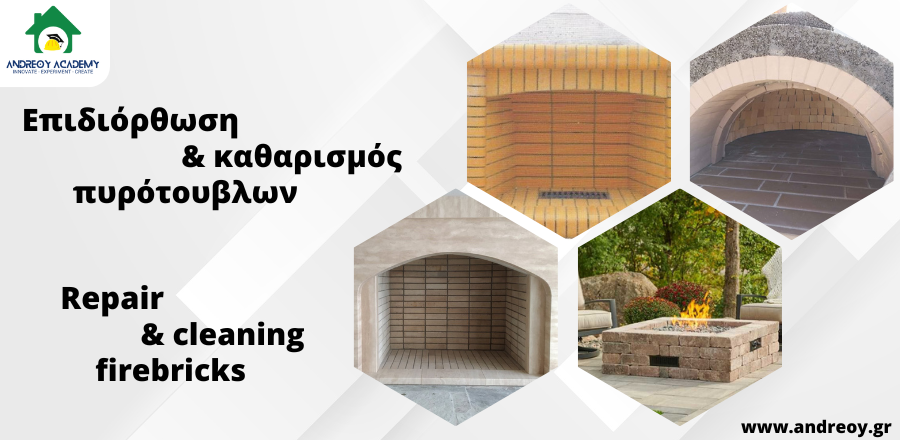
DIY repair and cleaning of your fireplace and barbecue firebricks is not only an economical solution, but also an opportunity to take care of your favorite fireplaces. By choosing the appropriate refractory mortars-adhesives and firebrick cleaners, you can ensure their durability, safety and aesthetics for many years.
- Don't be afraid to take action! With the right tools and a little patience, you will once again enjoy the warm touch of the fireplace and the flavors of your barbeque in a renewed and welcoming environment. Happy DIY repairs!
